

How to Protect Your Feet as the Seasons Change
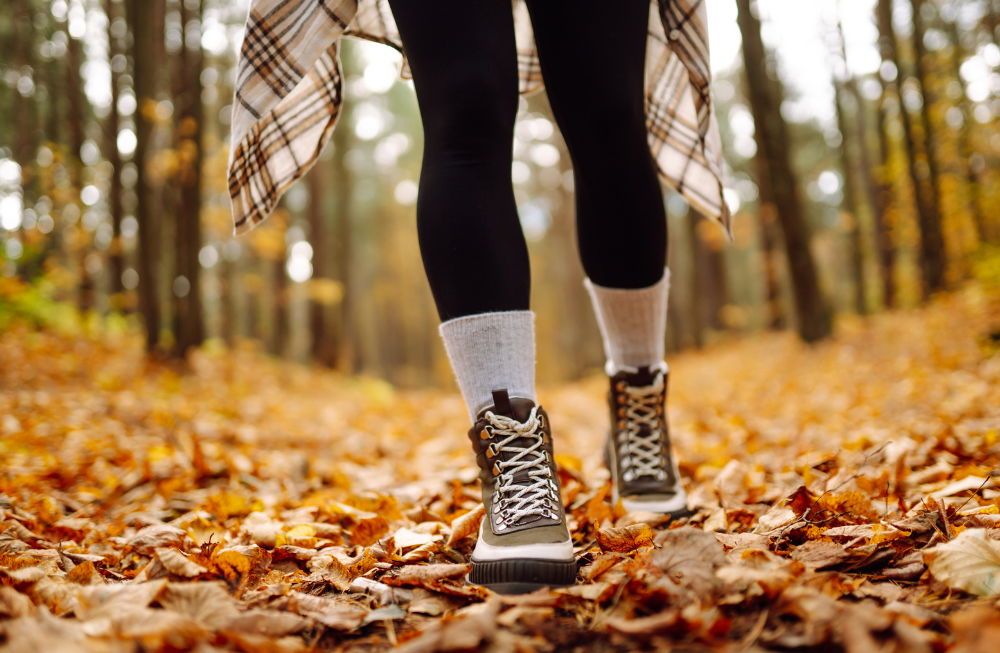
As the days shorten and temperatures drop, most of us instinctively reach for warmer footwear. Trading summer sandals and flat shoes for enclosed boots might feel like a simple swap, but for your feet, it can be anything but. In clinic, we see a predictable rise in foot complaints every autumn, many of which are directly linked to seasonal footwear changes. Here is what you need to know to make the transition smoothly.
The Problem with Summer Flats
It is easy to underestimate how much damage flat, unsupportive footwear can do over a summer. Flat shoes and sandals typically offer minimal arch support, little cushioning, and little to no heel elevation. Over time, wearing very flat footwear increases the load on the plantar fascia, the band of tissue running along the base of your foot, and places prolonged strain on the Achilles tendon. A best practice guide published in the British Journal of Sports Medicine specifically highlights that flat, unsupportive footwear should be avoided in patients with plantar heel pain until symptoms have resolved, and that a small heel raise can help reduce tension on the calf and fascia. (Morrissey et al. 2021)
If you have spent several months in flatter footwear, your calf muscles and Achilles tendon may have adapted. This sets the stage for problems when you suddenly change your foot position.
The Transition Challenge
Enclosed boots, particularly those with a heel or a rigid upper, alter your foot position, gait, and the pressure distribution across your foot. After months in open, flat shoes, your foot and lower limb soft tissues need time to adapt. Switching too quickly can lead to:
- Achilles tendon irritation, particularly if the boot collar digs into the back of the heel or if heel height changes abruptly
- Blisters and skin breakdown from friction in areas that have not been enclosed all summer
- Pressure on bony prominences such as the little toe, bunion, or top of the foot from tighter, less accommodating uppers.
Enclosed footwear can create a warm, moist microclimate inside the shoe. Research confirms that high in-shoe temperature and humidity increase vulnerability to fungal skin infection (tinea pedis). Ning, K. et al. (2022)
Footwear Tips
- A toe box that allows your toes to lie flat and spread naturally – avoid narrow, pointed styles
- A small heel (1–2 cm) rather than completely flat – this takes tension off the Achilles and plantar fascia (Morrissey et al. 2021)
- Adequate cushioning in the insole – softer insole materials have been shown to reduce plantar pressure (Melia 2021 et al.)
- A heel counter (the firm back of the shoe) that holds your heel securely without pressing on the Achilles insertion
- Breathable materials to reduce moisture build-up and fungal risk (Ning et al. 2022).
Tips for a smooth transition
- Introduce new boots gradually, start with a few hours per day and build up over 1-2 weeks
- Moisturise your feet daily to keep skin supple and reduce cracking, particularly on the heels
- Choose moisture-wicking socks to reduce humidity inside the boot (Ning et al. 2024)
- Inspect your feet regularly, check for for early signs of blisters, pressure marks, redness, or fungal infections.
Podiatry support
If you notice persistent foot pain, blisters that are not healing, thickened or discoloured toenails, or any area of skin breakdown, do not ignore it. Early intervention by a podiatrist can prevent small problems from becoming significant ones. Regular foot checks are important.
Contact our dedicated Patient Care Team on 01372 723000 to make an appointment or book directly online.
References
Morrissey, Dylan et al. “Management of plantar heel pain: a best practice guide informed by a systematic review, expert clinical reasoning and patient values.” British journal of sports medicine vol. 55,19 (2021): 1106-1118. doi:10.1136/bjsports-2019-101970
Ning, K. et al. (2022) ‘Effects of textile-fabricated insole on foot skin temperature and humidity for enhancing footwear thermal comfort’, Applied Ergonomics, 104, p. 103803. doi:10.1016/j.apergo.2022.103803.
Melia, G. et al. (2021) ‘Insoles of uniform softer material reduced plantar pressure compared to dual-material insoles during regular and loaded gait’, Applied Ergonomics, 91, p. 103298. doi:10.1016/j.apergo.2020.103298.