

Ingrown toenails: what are they and how can a podiatrist help?
 With discomfort often stopping us doing the things we enjoy most, ingrown toenails can be painful and frustrating, especially when they keep reoccurring. However, there is light at the end of the tunnel. If you are struggling with persistent ingrown toenails, it’s time to see a podiatrist, like us at Epsom Footcare. We have the tools and expertise to make you more comfortable and potentially stop the issue for good. In this article we explore prevention tips, what you can do at home and when it is time to see a professional.
What are ingrown toenails?
Ingrown toenails, clinically known as onychocryptosis, are surprisingly common and develop when the sides of your toenails grow into the surrounding skin. Some people are more susceptible to ingrown toenails, as their nails may naturally grow in a curved, involuted shape which can often be hereditary. Chances also increase if you do a lot of sports or wear tight fitting shoes.
The condition can affect either side of the nail and in the majority of cases it affects the big toe. However, it can affect any of the lesser toes too. The nail may curl around and under, piercing the skin and causing your toe to become painful, inflamed, swollen and tender.
If left unresolved your ingrown toenails may become infected. If you become hot and shivery and/or if the toenail is becoming increasingly inflamed, discharging pus or bleeding, you should seek urgent attention from your GP or podiatrist as you may need antibiotics to fight the infection.
How to prevent an ingrown toenail at home:
There are several things you can do at home to try and prevent frustrating ingrown toenails.
- Do not cut your toenails too short
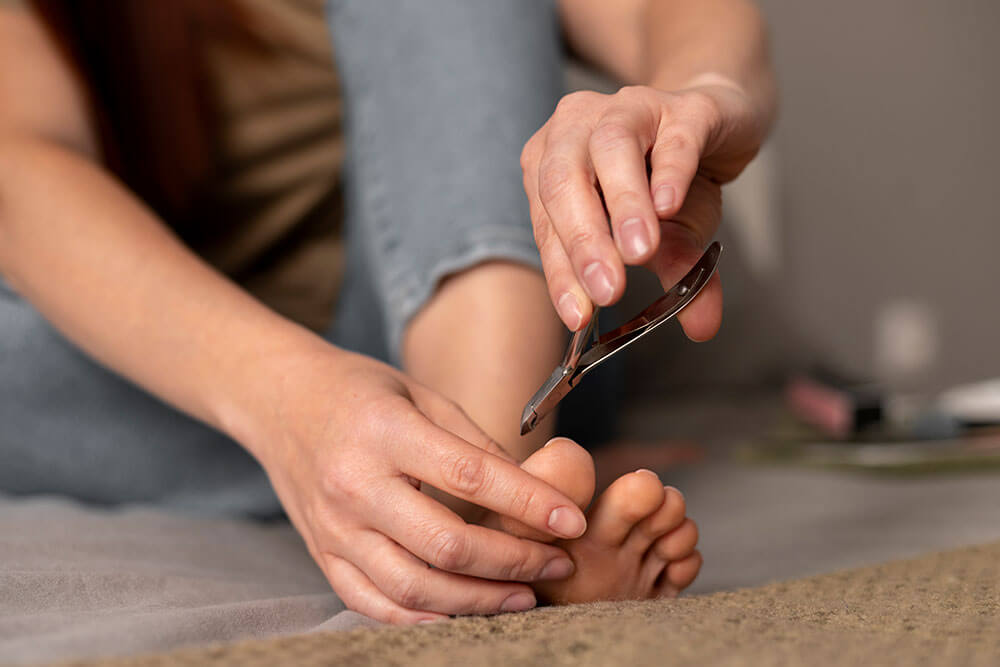
- Cut straight across the nail, not down at the edges
- Wear socks and shoes that aren’t too tight and have a good amount of toe room. A square shaped toe box in the shoe is ideal
- Keep your feet clean and dry them thoroughly.
If you currently have an ingrown toenail or you think one may be starting, you may find that bathing the toe in warm salty water helps.
How can a podiatrist help ingrowing toenails?
If your ingrown toenail is causing you pain, a podiatrist can help by carefully removing the spike of nail. This may require the use of a local anaesthetic to numb the toe depending on how painful your condition is; our podiatrists are trained to do this.
Your podiatrist will also offer advice on how to care for your nails moving forward and how to prevent ingrown toenails in the future. We aim to eliminate the risk of infection and make you as comfortable as possible, as quickly as possible, striving to achieve this without the need for surgery whenever feasible. However, in severe and recurring cases, nail surgery may be the only solution.
At Epsom Footcare, if your podiatrist has assessed your problem and feels nail surgery is required, we will book you in for a further appointment where we can skillfully remove the offending part of your nail under local anaesthetic. We then use a chemical called phenol (phenolization) to prevent the nail from growing back, solving your ingrown toenail nightmare for good! Although there is some recovery time, toenail surgery does not affect the function of your toes, and with partial nail removal, the remaining skin will eventually heal comfortably to the side of the nail, creating a normal, yet slimmer looking nail.
If you are struggling with an ingrown toenail, book in for an initial consultation and start your journey to pain free toes! Alternatively you can contact our Patient Care Team on 01372 72300 or email enquiries@epsomfootcare.co.uk.